

Inked Between
the fine lines of living

“Having someone who believes in you makes a lot of difference. They don’t have to make speeches. Just believing is usually enough.” Stephen King wrote these lines when he tackled the loneliness that often swathes his craft, and how his wife, Tabitha, is resolute in her support of what he does that she became the lifeline of his work—the untiring hands paddling to keep the unsteady canoe of his job afloat in the relentless ripples of life.
But every so often one falters, convinced that the work at hand can never amount to something. Even Franz Kafka, the Prague-born author of The Metamorphosis—a timeless masterpiece about isolation and alienation—was not immune to this; his perpetual self-doubt, which became his terrifying tormentor and my ultimate salve, is evident in what he wrote in his diary:
“My talent for portraying my dreamlike inner life has thrust all other matters into the background; my life has dwindled dreadfully, nor will it cease to dwindle. Nothing else will ever satisfy me… Thus I waver, continually fly to the summit of the mountain, but then fall back in a moment. Others waver too, but in lower regions, with greater strength; if they are in danger of falling, they are caught up by the kinsman who walks behind them for that very purpose. But I waver on the heights; it is not death, alas, but the eternal torments of dying.”
Unhappiness and perhaps the sense of not having a kinsman to paddle with him were the recurring things that engendered Kafka’s anguish. He couldn’t deny his astonishment at how writers, including himself, could still write about depression in the middle of their depression despite it having “raked me to the bottom of my being and plainly exhausted all my strength.” But other than unhappiness, there is heedlessness—the untenable disregard for life.
When this plague of dissatisfaction coupled with the propulsive forces of despondency—and later on, the repulsive, desensitizing effects of medicine—infects the otherwise flourishing regions of the mind, dissociation could seem inescapable, could seem, at a certain point, the inevitable conclusion. The me that was not-me laughed but didn’t feel happy, passed the time without the usual zest to seize it, averted anything that demanded her care. This feeling that is non-feeling was on a wholly unfamiliar height, so far removed from the deepest moats of being. I picked up a book after three months, remembering Good Bones, and in an attempt to see if there was anything still salvageable in the real shithole of my non-being. You Could Make This Place Beautiful, the title affirmed my skepticism, and Maggie Smith captured it so pointedly in her memoir:
“The treatment itself was something to endure: the flat feeling, like monotone. I’d always felt high highs, low lows. I’d always been black or white. But Lexapro was gray, gray, gray. I listened to sad songs, alarmed that they didn’t make me feel sad. They didn’t make me feel anything.”
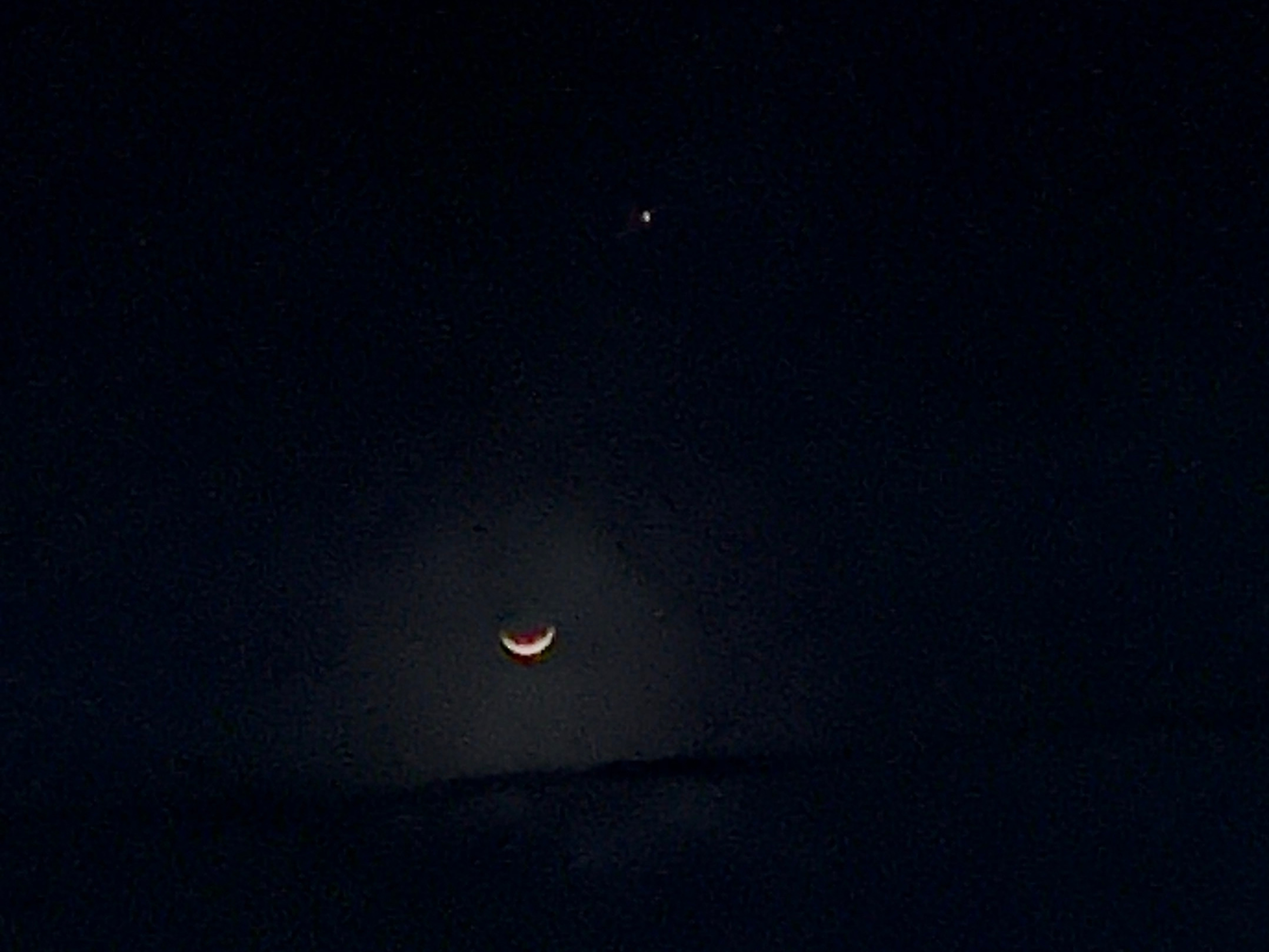
From thereon I slowly got out of the hellish fits of madness but I was still way too far from the heavenly doorstep of revival. The me that was inhibited, raked, stolen and reburied in its grave, would occasionally cast its apparition during some of the many nights of wakefulness. I would care, albeit momentarily, about the increasing number of bruises on my skin, the guilt of ghosting, the threat of apathy, the memories that seemed to be drifting farther and farther away. I would wonder—and sometimes fear—if the emotional blunting would last, and I would never again feel something profound just by looking at the sky and seeing the splendor of the Earth’s sole naturally occurring satellite.
In the purgatory of non-feeling, where yesterday was the same as today and will be the same tomorrow, there was everything yet nothing to write about. And to write without affection is like typing a bunch of empty, discordant words. On the rare occasions that I go online in those months, I descend to the temptation of observing the ebb and flow of the lives of those who seem more resilient and more adaptive to their circumstances, just as Kafka did, despite knowing a lot is going on unfiltered outside the internet bubble. But Maggie Smith’s next words were a breath of consolation when she said, “The flat gray, the deadening, was worth it [...] and eventually it gave way to shades of gray. There were almost whites, almost blacks.”
It is fitting that the last book I read last year was Edward the Emu by the Australian writer Sheena Knowles. This lovely, sui generis emu has self-esteem issues and thinks of himself as a bore. He decides to be a seal the next day because he thinks the seals are more fun, and each time he hears tourists praise another animal for being the best in the zoo, he chooses to be like them as well.
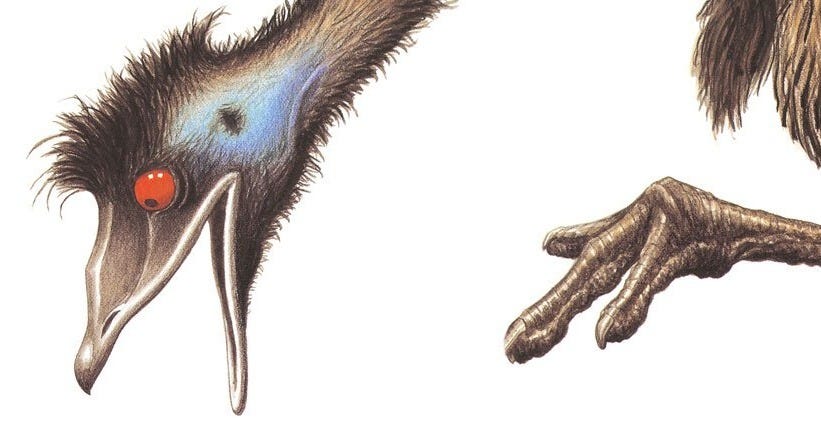
Emus are considered to possess a naturally curious character. With their rarity, being particularly endemic to Australia, and their striking physique—a face that expresses both animosity and amusement, a handsome nose, and a cosmic blue neck that emerges from the dusty brown feathers of the body—it’s easy to be both charmed and intimidated by their uniqueness. Yet, Edward viewed himself as insufferable. He tries to be like the others not out of curiosity. He doesn’t exactly want to be someone else; he just doesn’t want to be himself. But one day, while being a snake, he heard one of the visitors say, “The snakes are impressive, I know that it’s true, but the emu’s by far the best thing at the zoo.” Edward gasped. “My goodness, that’s me!” To his surprise, there exists a Tabitha in his life, too; he had someone who believed in him.
After reading the book, I woke up the next morning challenged by the famous line from Hamlet, almost like it came from last night’s dream: “To be or not to be—that is the question.”
To be or not to be what? I asked myself. When this space was born out of darkness, I wanted so much to generate light. In a way, it became instead a form of survival where I freely threw vases on the ground and stomped on the broken shards, where I sat on the corner of a wall motionless for hours, where I filled my pockets with the bones of the unbeloved dragging me down a bottomless pit. Mostly, it was my shadows speaking, and I was having a hard time accepting the ugly strands of life that tied those words together. To elude ourselves—unable to make amends for surrendering to the black hole so eager to swallow the cosmic parts of our existence—is probably the most treacherous thing to subject ourselves to. It will be a life that is not life but empty affectations. Suffering, too, is a part of the larger whole of our continuous arrival to ourselves, and denying ourselves in our suffering rejects the idea of a self that is ever-malleable and ever-changing in its receptivity. But where there is shadow, there is light. Before Edward became the emu he’d always been, a better version even—enlivened and more accepting of himself—he first had a preconceived notion of being a dull, unentertaining emu. His self-degradation made him undergo a series of changes trying to find his way to be better, and even though the skins he wore never quite fit, it led him to that one person who made him see his worth.
And so the answer: to be more than confessional and not to be restrained and punished for the grotesque circumstances outside of my control, because really, I am merely a blotch of ink in this immeasurable space that is continuously being written, just as my thoughts live between the pages of many others’ thoughts, and my wounds bleed with many others’ wounds. How bearable everything must be that we can still bear to write some parts of our “eternal torments of dying,” at the very least. To borrow the words of James Baldwin:
“You think your pain and your heartbreak are unprecedented in the history of the world, but then you read. It was Dostoevsky and Dickens who taught me that the things that tormented me most were the very things that connected me with all the people who were alive, or who ever had been alive. Only if we face these open wounds in ourselves can we understand them in other people.”
Between the lines already written across ethos and eras is a vacancy waiting to be filled—energies outside of ourselves to wander with, new wonders that dwarf old wounds, bright dreams that thwart our darkest nightmares. And there is so much still, waiting to be inked between, that the past dwindles to a faded prologue of this heavy tome of life. We just have to believe everything will turn out for good. Just believing is usually enough.
i heard something today that this piece reminded me of, that anxiety usually stifles creativity; in the same vein creativity can be used to dispel anxiety. here’s to having the courage to believe and to let in more creativity and creation 🤍